
Riding Lawn Mowers vs Push Mowers: Which Is Right for You?
Choosing between a riding lawn mower and a push mower sounds simple — until you actually start comparing them. Riding mowers cost 5–10x more, take more space, and use more fuel. Push mowers are cheap, simple, and easy to store. So when does the upgrade make sense?
This guide gives you a clear answer based on the things that actually matter: yard size, time, comfort, cost, and storage.
The 30-Second Answer
If your yard is under 1/2 acre, stick with a push or self-propelled mower.
If your yard is over 1/2 acre and you mow it yourself, a riding mower will pay back in time and effort within a season or two.
Anyone in between should keep reading — the details below will tip the decision.
Time: The Single Biggest Difference
Mowing time grows linearly with yard size, but riding mowers cut wide swaths and let you sit. Real-world numbers:
- 1/4 acre with push mower: ~25 minutes
- 1/2 acre with self-propelled: ~45 minutes
- 1 acre with push mower: ~90 minutes (exhausting)
- 1 acre with riding mower: ~30 minutes
- 2 acres with riding mower: ~60 minutes
- 2 acres with zero-turn: ~40 minutes
If you mow weekly during a 26-week growing season, a riding mower can save you 30+ hours per year.
Cost: Upfront vs Real
A solid push or self-propelled mower runs $300–$900. A basic riding mower starts around $1,500. Quality mid-range riding mowers fall in the $2,000–$3,000 range.
However, factor in:
- Fuel: riding mowers use more gas, but for the same yard, you spend fewer hours running the engine
- Maintenance: riding mowers have more parts that wear, but quality units last 15+ years
- Lawn service alternative: if you would otherwise pay $40–$60/cut for a 1-acre yard, a riding mower pays for itself in 1–2 seasons
Comfort: Why It Matters More Than You Think
Pushing a mower for 90 minutes in 90°F heat is brutal. Many people who switch to a riding mower say the comfort upgrade alone was worth it — they actually look forward to mowing now.
Riding mowers also let you mow when you would otherwise skip — bad knees, recovering from injury, or simply low energy days.
Storage Space
This is the dealbreaker for many homeowners. A push mower fits in a closet or small shed. A riding mower needs a 6’x6′ minimum area, ideally a real shed or garage.
Before buying a riding mower, measure your storage. Check that doors, hallways, and turning radii actually fit the mower.
Push Mower Top Picks
- Honda HRN216PKA 21″ Push Mower — bulletproof reliability, great cut
- EGO Power+ 21″ Self-Propelled (Battery) — best for medium yards
- DEWALT 21″ 163cc Self-Propelled (Gas) — affordable workhorse
Riding Mower Top Picks
For 1/2 to 1.5 Acres
- John Deere S130 Riding Mower — the classic for residential lawns
- Cub Cadet XT1 LT46 (46″ deck) — strong value
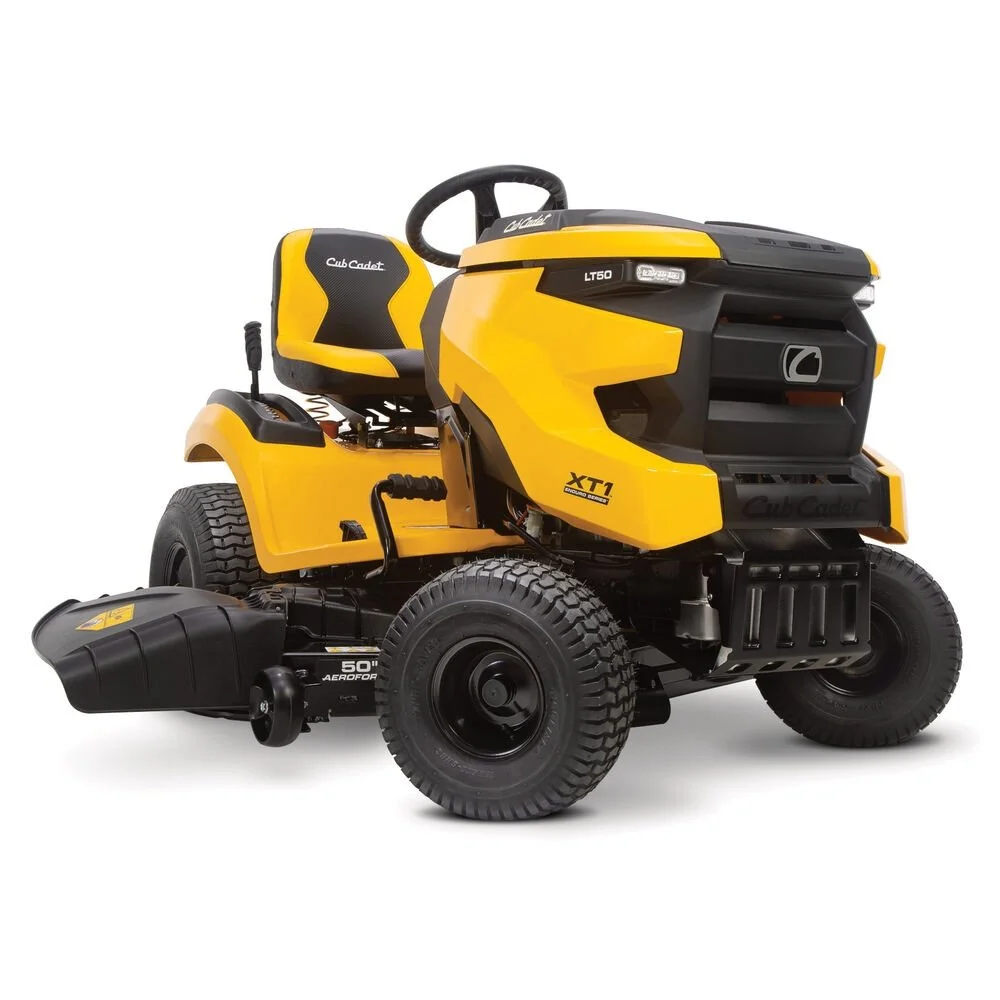
- Cub Cadet XT1 LT50 (50″ deck) — bigger deck for faster mowing
For 1.5 to 3+ Acres
- Cub Cadet Ultima ZT1 60″ Zero-Turn — fast and precise on large lots
- Toro TimeCutter 5000 50″ Zero-Turn — premium ride quality
Battery Riding Mowers: Are They Ready?
Yes, in 2026 they finally are. The Yard Force 38″ 48V Battery Riding Mower and Kobalt Crossover Electric Tractor KT 5680-06 deliver real-world performance for yards up to 1.5 acres on a single charge — quietly, with no fuel and no maintenance.
Final Thoughts
The push-vs-riding decision really comes down to yard size and how you value your time. Under 1/2 acre, push mowers win on price, simplicity, and storage. Over 1/2 acre, riding mowers reclaim hours of your weekend and make mowing tolerable, even enjoyable.
Browse the full lawn mower lineup at Gioaccessories.com to compare push, self-propelled, and riding options side-by-side.