
Single-Stage vs Two-Stage Snow Blowers: Complete Comparison Guide
Buying a snow blower comes down to one big question: single-stage or two-stage? Get this right and you will breeze through every winter. Get it wrong and you will fight your machine through every storm.
This guide explains the real differences, who each one is for, and our top picks in both categories for the 2026 winter.
The Quick Answer
Single-stage snow blowers are right for: paved driveways, walkways, light to moderate snowfall (under 8 inches), and warmer climates that get a few storms a year.
Two-stage snow blowers are right for: gravel or longer driveways, heavy snow (8+ inches), wet/packed snow, and northern climates with serious winters.
How Single-Stage Snow Blowers Work
A single-stage snow blower uses one rotating auger that both scoops up the snow and throws it out the chute in one motion. The auger touches the ground (or comes very close to it), which is why these only work on smooth surfaces like concrete or asphalt.
Pros:
- Lighter and easier to maneuver (50–100 lbs)
- Cheaper — usually $400–$900
- Easier to store
- Great battery options now available
Cons:
- Cannot use on gravel, dirt, or uneven surfaces
- Struggles with snow over 8″ deep
- Wet snow can clog the chute
- Most are not self-propelled
How Two-Stage Snow Blowers Work
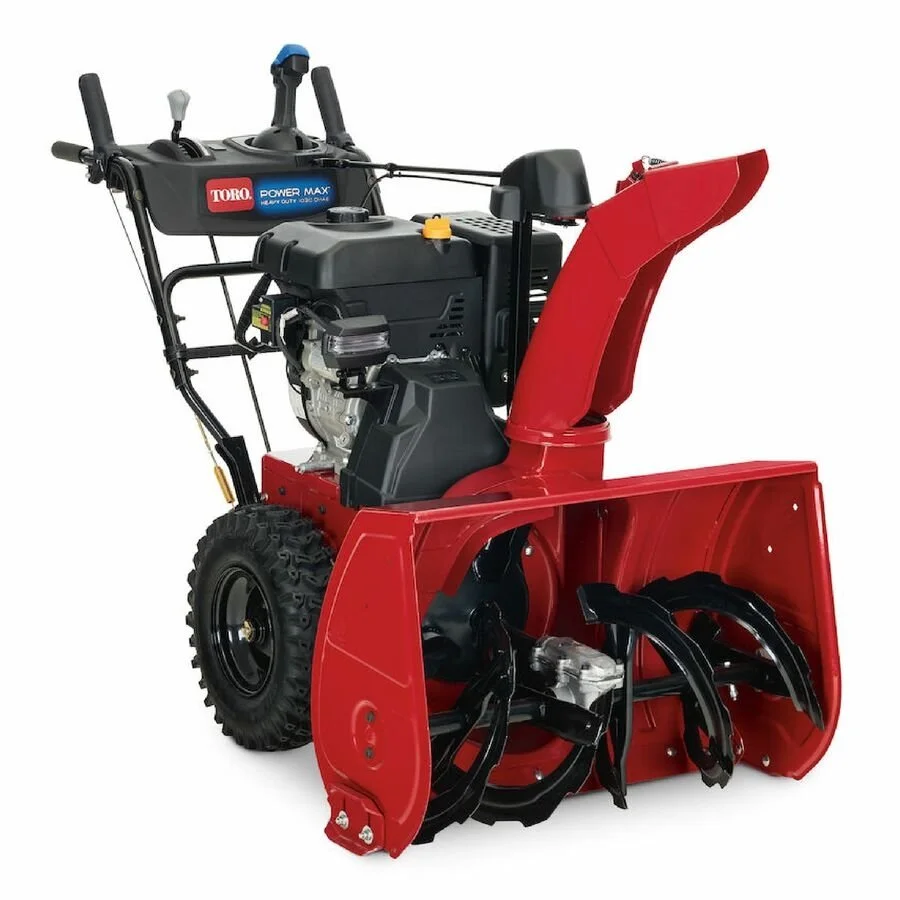
A two-stage snow blower has two separate mechanisms: a slow-turning auger that breaks up snow and feeds it into a faster impeller, which then throws it out the chute. The auger does not touch the ground, so the machine works on any surface.
Pros:
- Handles deep snow (12″+ no problem)
- Works on gravel, dirt, uneven driveways
- Self-propelled, so you do not push the weight
- Throws snow much farther (30–50 feet)
- Wider clearing paths (24–32″)
Cons:
- Heavier (200–300 lbs)
- More expensive — usually $1,200–$3,500
- Needs more storage space
- More moving parts to maintain
Three-Stage: A Quick Note
Three-stage snow blowers add an accelerator between the auger and impeller, processing snow up to 50% faster than two-stage models. They are overkill for most homeowners but unbeatable for very heavy snow regions. The Cub Cadet IntelliPOWER series and similar premium models are worth a look if you live in a true snow belt.
Match the Right Type to Your Situation
Pick Single-Stage If:
- You have a flat, paved driveway under 60 feet long
- You typically get 2–7 inches per storm
- You want something light and easy to store
- Battery operation appeals to you
Pick Two-Stage If:
- You have a gravel, dirt, or sloped driveway
- You get storms over 8 inches multiple times per winter
- Your driveway is long (60+ feet) or you have walkways too
- You want the snow thrown well off your property
Top Single-Stage Picks for 2026
- Toro Power Clear 721 QZE 21″ Electric — quiet, push-button start, perfect mid-size driveways
- Toro Power Clear Battery 39901T — gas-free with serious power
- EGO POWER+ 21″ Snow Blower SNT2114 — best cordless single-stage
Top Two-Stage Picks for 2026
- Toro Power Max HD 1030 — premium gas two-stage, handles anything
- Husqvarna ST 230 30″ Two-Stage — wide clearing path for big driveways
- Honda HSS1332AAT 32″ Track Drive — best for steep or icy driveways
- Cub Cadet 2X 26″ IntelliPOWER — strong all-rounder
- EGO Power+ 24″ Two-Stage Cordless SNT2400 — battery two-stage, surprisingly capable
Final Thoughts
Buying the wrong stage of snow blower is the most common — and most expensive — mistake homeowners make. Be honest about your driveway surface, your typical snowfall, and how much you want to deal with the machine. The right one will serve you for 15+ winters; the wrong one will frustrate you every storm.
Browse the full snow blower collection at Gioaccessories.com to compare specs and find the perfect match for your driveway.